How to get a FIFO job with no experience
In short
- Yes, you can get a FIFO job with no experience, but it’s competitive. Most people start in camp, utility, labouring or trade assistant roles, or on shutdown crews.
- Connections help most: ask everyone you know if they know someone. Apply online, through contractors and labour hire at the same time.
- Employers look for common sense, safety awareness and a willingness to work hard. Tickets help a lot: start with a White Card, working at heights and confined space.
- Coming from overseas? Bring a buffer of around 5,000–10,000 AUD and be ready to work in the city while you look.
General information, not legal, migration or career advice. Nobody can promise you a job or a start date, including us.
Can you get a FIFO job with no experience?
Yes. People do it every year, and many of them learn almost everything on the job. Working in the city and working on a mine site are very different, so employers expect to train new starters in how site work is done.
It is competitive, though. Entry-level mining jobs don't come up often and can attract thousands of applications.1 If you're on a working holiday visa, some employers prefer people with full work rights.
The good news is that shutdowns are a big market. A shutdown has to be done in a fixed window while the plant is stopped, so contractors need a lot of people at once, and that's how they earn their money. That's why you'll see plenty of green (inexperienced) workers on shutdowns. It isn't necessarily easier to get on a shutdown, but the numbers have to be filled, so there are more spots to go for. Common
Which jobs can you start in?
| Role | What it involves | What helps you get it |
|---|---|---|
| Camp hospitality | Housekeeping, cleaning, kitchen hand, wet mess (bar) | Cleaning, hotel or kitchen experience. Bar work needs an RSA.7 |
| Utility worker | A bit of everything around camp or site: cleaning, laundry, stores, grounds | Reliability, a driver's licence |
| Labourer | General site work: cleaning up, moving gear, helping crews | White Card, working at heights, fitness |
| Trade assistant (TA) | Helping a tradesperson: carrying, holding, prepping, cleaning up | Any trade or hands-on background, core tickets |
| Shutdown crews | Short, intense blocks of maintenance work while the plant is stopped | Tickets, being available at short notice |
| Storeperson, bus driver | Stores and logistics, driving crews to and from site | Forklift licence or the right driver's licence class |
| Trainee operator | Learning to drive haul trucks or other plant | Rare and competitive1 |
Not sure what FIFO involves yet? Start with What is FIFO?
How do people actually get hired?
Use every route at the same time. In practice, these are how people get in: Common
- Connections. This is the best route. Ask everyone you know whether they know someone working FIFO or at a contractor: friends, friends of friends, old workmates. A good word from someone already on the inside gets your name in front of the right person. People have even landed jobs from a chat at the pub on a Friday night.
- Online applications. Job boards and company career pages work too. Plenty of people get their first job this way. Expect to send a lot of applications.
- Contractors and labour hire. Much of the FIFO workforce works for contractors rather than the mining companies themselves: maintenance, shutdown, camp services and labour-hire firms. Apply to them directly, not just the big names.
- Showing up in person. Walking into an office or depot with your CV leaves more of an impression than an email. Some recruiters will still only ever speak to you on the phone.
What gets people hired
Good references and a strong work ethic can count for more than experience. A referee who can say you're a hard worker, turn up on time and listen is worth a lot when you've never been on a mine site.
What do employers look for in a new starter?
- Common sense. The number one thing.
- Willingness to work and get your hands dirty. Nobody expects a new starter to be good straight away. They value someone who wants to do better and improves step by step.
- Safety awareness. Mining has very high safety standards. The more "by the book" you are, the better.
- Attitude and manners. Polite, easy to work with, and willing to ask when unsure.
- Fitness for long physical shifts, often in heat.
- Reliability: answering your phone, turning up, and being available when they need you.
- Knowing your safety basics, out loud. Be ready to answer safety questions at any time. At prestarts, and when supervisors or safety advisors visit your job, you can be asked at random about the hazards, the controls in your paperwork, or what you'd do if something goes wrong. A clear answer shows you're switched on. "I'm not sure, I'll check" is far better than a guess. Common
What tickets do you need?
The more relevant tickets you hold, the better your chances of being picked. Common Start with the core tickets for site work, then add the licences and qualifications for the job you're aiming at.
Core tickets for most site roles
| Ticket | Notes |
|---|---|
| White Card (CPCWHS1001) | The construction induction card. Often asked for on mining ads. Where you can do the course depends on the state. In WA, providers say you must be in WA when assessed.8 |
| Working at heights | A core ticket you'll be asked for whatever your trade. |
| Confined space | Another core ticket for site work. Often paired with gas test atmospheres, which teaches you to test the air before entry. |
High risk work licences
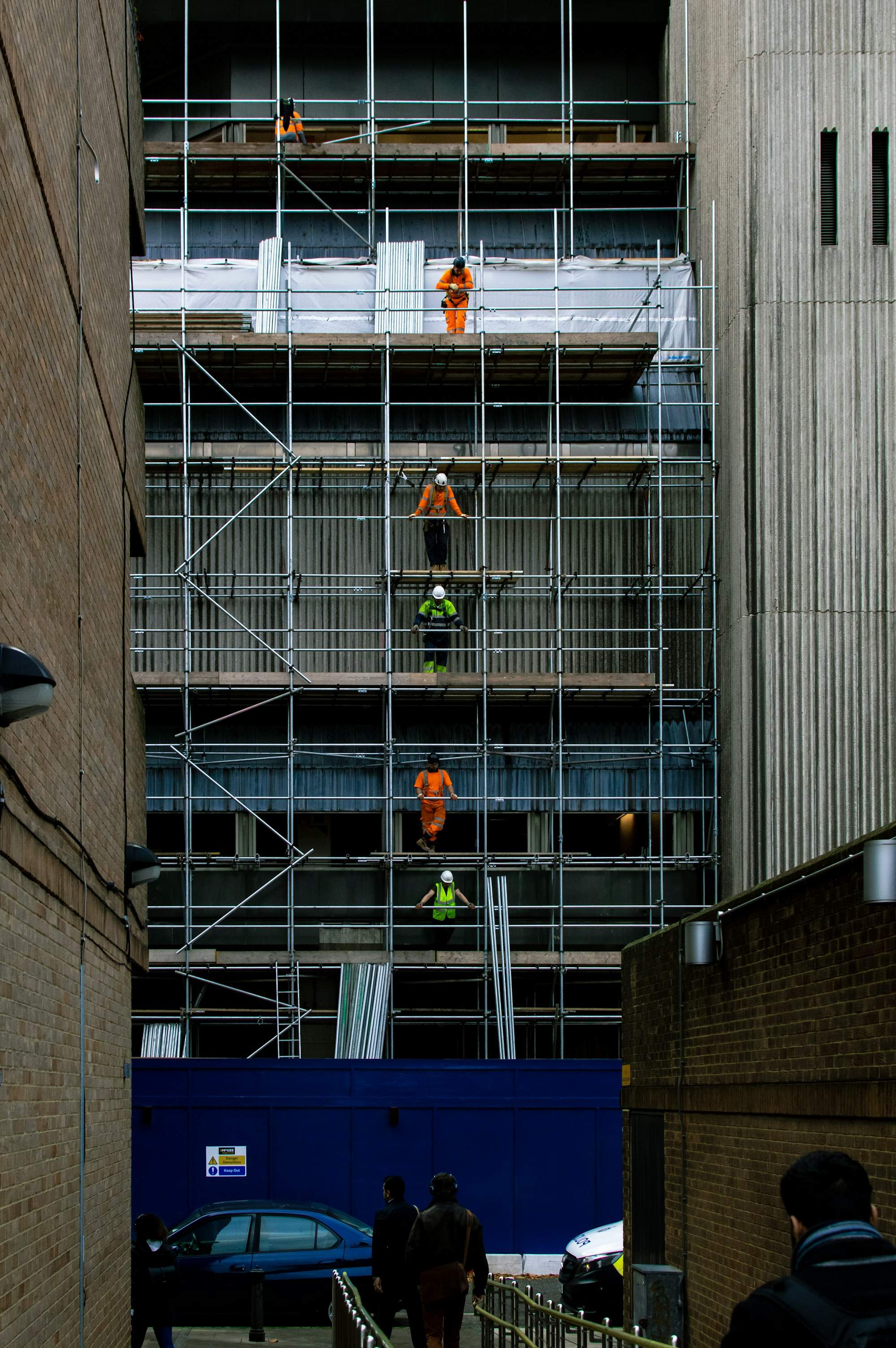
Some work legally needs a high risk work licence. You must be over 18, be trained by a registered training organisation, and pass an assessment with an assessor approved by the regulator.4 These are the classes WorkSafe WA lists. Other states use the same national classes. Law3
| Work | Licence classes | Who on a FIFO site |
|---|---|---|
| Scaffolding | SB basic, SI intermediate, SA advanced | Scaffolders |
| Dogging | DG | Doggers: slinging loads and directing crane lifts |
| Rigging | RB basic, RI intermediate, RA advanced | Riggers |
| Cranes | Many classes, e.g. C2, C6, C1, C0 (slewing mobile), CN (non-slewing), CV (vehicle loading), CB (bridge and gantry), CT (tower), CD (derrick), CP (portal boom), CS (self-erecting tower), RS (reach stacker), plus earthmoving equipment used as a crane | Crane operators |
| Forklift | LF forklift, LO order-picking forklift | Stores, logistics, many trades |
| Boom-type elevating work platform | WP: boom length 11 metres or more15 | Anyone working from a big boom lift |
| Concrete placing boom | PB | Concrete crews |
| Hoists | HM materials hoist, HP personnel and materials hoist | Construction and shutdown crews |
| Pressure equipment | BS, BA boilers; TO turbines; ES reciprocating steam engines | Plant operators on processing sites |
First aid isn't a core ticket. Many site workers don't hold one, and you can get hired without it. It's an optional extra. Common
Scissor lifts and booms under 11 metres don't need a high risk work licence, but the employer still has to make sure you're trained and competent. In practice, many employers ask for an industry EWP card (often called the "yellow card") or the equivalent training unit. Common
Tickets and qualifications by trade
Trades need a qualification (usually a Certificate III earned through an apprenticeship), and some also need a licence. What's typical on FIFO sites:
| Role | What you usually need |
|---|---|
| Electrician | An electrical licence from the state. In WA, electrical work may only be done by someone holding the right electrical worker's licence, issued through Building and Energy. Law16 Mine sites often add their own authorisations, e.g. for high-voltage switching. Varies |
| Mechanic, diesel fitter | A trade qualification, such as heavy vehicle or mobile plant mechanics. No separate licence, but site VOCs for the gear you work on. Common |
| Fitter, boilermaker, welder | A trade qualification. Welding tickets or tests for specific work are often asked for. Common |
| Scaffolder, rigger, dogger | The high risk work licences above, plus a site VOC. |
| Formworker | Formwork experience or a formwork qualification. A dogging licence if you'll direct crane lifts. Common |
| Driller, drillers offsider | Offsiders often start with no drilling ticket and learn on the job. Drillers usually hold drilling qualifications such as the Certificate III in Drilling Operations (RII31820).17 Common |
| Machinery operator (haul truck, excavator, loader, dozer, grader) | No high risk work licence for operating earthmoving plant itself, but the employer must make sure you're trained and competent.18 Operators usually hold units from the Certificate III in Surface Extraction Operations (RII30120) and always do a site VOC. In WA, lifting loads with earthmoving equipment can count as crane work. Varies |
| Truck or bus driver on public roads | The right driver's licence class for the vehicle, e.g. heavy rigid (HR) or heavy combination (HC). Law |
| Camp: bar, kitchen | RSA for bar work (in WA, within 28 days of starting Law7). Food safety training for kitchen roles. Common |
| Queensland coal mines | Coal mine workers in Queensland complete a "Standard 11" induction, surface or underground, before starting. Some operators run their own version. Varies |
We've written this for people starting out. If you're already a tradesperson, check the job ad and your state regulator for the exact licence you need.
Who pays? Usually you, at the start. Companies do pay for some tickets, but generally only once you've worked for them for a while. They won't invest in courses for a new starter before they know you'll stay. Common Some labour-hire firms say their clients prefer to train entry-level staff themselves,1 so if you're aiming at one employer, ask what they require before you buy an expensive ticket.
What is a VOC?
A VOC (verification of competency) is a check that you can safely do a task or operate a machine on that particular site, with its own equipment and rules. Holding a licence isn't enough on its own. Mine operators have to verify competence before you do the work.6
Scaffolders may need a VOC for scaffolding. If you'll operate an EWP, a forklift, a light vehicle or heavy machinery on site, you'll usually do that site's VOC for it, often on the first day of a shutdown. If your shutdown doesn't involve operating machinery, you might not need one. Varies
Do you need an Australian driver's licence?
You can get a FIFO job without one, but a driver's licence is a big plus, and many employers look for it. Many sites don't accept an overseas licence for driving on site, likely for insurance reasons, so an Australian licence is the one to have. Varies
- Driving on your overseas licence: on public roads in WA, visitors such as tourists and people working temporarily can drive on a current overseas licence. They don't have to transfer it. Law5
- On site, the rules are different. The mine sets its own rules for who can drive on site. Many sites only accept an Australian licence, and you'll still need the site's own driving VOC before you can drive a light vehicle there. Being legal on the road doesn't mean you can drive on the mine. Varies
- Transferring to a WA licence: licences from recognised countries can be transferred without a theory test or driving assessment. Other licences need both tests.5
- New from 31 October 2026: WA adds Bulgaria, the Czech Republic, Estonia, Hungary, Latvia, Lithuania, Poland, Cyprus, Serbia, Romania, Slovakia, Slovenia, South Korea and Taiwan to the recognised list for car and motorcycle licences. Applications made before that date still need the tests. You must also meet WA's identity, residency and medical requirements.5
Other states have their own rules. Check with the transport department in the state you'll live in.
What happens between applying and your first fly-in?
- Apply Through a contact, an ad, a contractor or labour hire.
- Phone interview Often the only interview you get. Some recruiters never meet you in person.
- Offer Usually depends on passing the checks below.
- Tickets Get any tickets the job needs before onboarding, if you don't already hold them.
- Medical and drug test A pre-employment medical and a drug and alcohol test. Near-universal.2
- Police clearance Some sites ask for a national police clearance, especially gold mines. Varies
- Inductions and paperwork Online inductions, contracts and tax forms. Some companies also run an onboarding day.
- Fly-in If everything comes back fine, your flight details are sent to you and you fly in to site.
- Day one Site induction, then any VOCs you need.
Example
From the phone interview to flying in for the first swing took about two weeks with one WA contractor. The tickets (scaffolding, EWP, forklift, working at heights, confined space and White Card) were done before onboarding, then came the medical, drug test, inductions and paperwork.
It can be much faster. If you already hold the tickets and the employer is in a rush, you can be flying in on very short notice, sometimes within 2–3 days. Keep your bag half-packed.
Coming from overseas: before you arrive and once you're here
| Sort out before you arrive | Happens once you're in Australia |
|---|---|
| Your visa, and its work rules (see below) | Pre-employment medical and drug and alcohol test |
| A CV and cover letter written for mining and camp roles | Most ticket courses, and the White Card in WA |
| A savings buffer (see the next section) | Interviews in person and dropping into offices |
| References from past employers who'll vouch for your work ethic | Transferring your driver's licence, if you want an Australian one |
| Reading up on how FIFO works, so you sound like you know | Building local connections |
| A police certificate, if you'll apply for sites that ask for one (some do, especially gold mines) | An Australian police check, if the employer wants one |
Recommended before you arrive
Do the FIFO Basics course and get the certificate. It's a short online course on how flights, camp, rosters and site rules work. When you pass the quiz you get a certificate with an ID and QR code that an employer can check. It isn't a licence or a ticket, but it shows you've taken the time to learn how FIFO works before your first phone interview, and it helps you sound like you know what you're signing up for. See FIFO Basics
How much money do you need while you look?
If you're coming from overseas, a buffer of around 5,000–10,000 AUD is realistic. Common
- Rent and living costs in Australian cities are high.
- Tickets cost a fair bit, and you'll pay for your first ones yourself.
- It can take time. You're not sure to get a mine job straight away, so be ready to work in the city while you look. Labouring and similar jobs in the city are much easier to find, and they give you local references.
- The first pay comes after you've started, so keep enough to cover the gap.
Mistakes that cost people the job
- A CV and cover letter that aren't thought through. Tailor them to mining and camp work: reliability, physical work, safety habits, and any trade or hospitality experience.
- Not picking up the phone. Recruiters often call once and move to the next person.
- Only applying online. Showing up in person, politely, puts a face to your name.
- Underselling yourself. Be confident talking about your skills, without overstating them.
- Not sounding safety aware. Mention safety habits from past jobs. It matters more in mining than almost anywhere.
- Bad manners on the phone, in emails or at the front desk. People talk.
How do you spot a FIFO job scam?
Pay-to-train and fake job scams target people new to FIFO, including working holiday makers.12,13,14 Walk away if anyone:
- Asks for a deposit, "application fee" or training fee to secure a job
- Contacts you on social media with a job you didn't apply for
- Asks for passport copies before there's a real job offer from a real company
- Promises a start date, or blocks you when you ask questions
- Uses a website or ABN you can't check against the real company
Paying a registered training provider for a ticket you choose is normal. Paying a "recruiter" to get you a job isn't. Report scams to Scamwatch.
On a working holiday visa?
General information from Home Affairs. Rules change, and we can't give personal visa advice. Check the official pages or talk to a registered migration agent.
- Subclass 417: mining in regional Australia counts as specified work for a 2nd or 3rd visa, including mining support services such as cleaning.9
- Subclass 462: mining isn't on the list of specified work. Some other work in northern and remote areas is.10
- Days off: the 88 days include weekends or equivalent rest days while you're employed, so R&R on a standard full-time roster counts. On casual shutdown work, only the days you work count, not the gaps between shutdowns. Keep your contract, roster and payslips. More detail.9
- The 6-month limit with one employer has exceptions, including mining in listed northern Australia postcodes.11
Your next steps
- Pick one or two realistic target roles from the table above.
- Get the core tickets, then the ones your target roles ask for.
- Rewrite your CV for mining and camp work, and line up references who'll vouch for your work ethic.
- Tell everyone you know you're looking, and ask if they know someone.
- Apply online, to contractors and to labour hire, and drop in where you can. Never pay to apply.
- Keep working while you look, and keep your phone on.
Don't rush, and don't let the stress knock your confidence. It takes effort, and nothing about it comes easy, but people get in every week.
Questions
How do I get a FIFO job with no experience?
Aim at entry roles (camp hospitality, utility, labouring, trade assistant and shutdown crews), get the core tickets for site work, and use every route at once: people you know, online ads, contractors and labour hire. Employers mostly look for common sense, safety awareness and a willingness to work hard, and they teach the rest on the job.
Can I get a FIFO job from overseas?
You can apply from overseas, but most of the hiring steps happen in Australia: the medical, the drug and alcohol test, some tickets, and often an interview or an onboarding day. Most people sort their visa, CV and savings at home, then land in a city like Perth and look for work in person.
What tickets do I need for FIFO?
For most site roles, start with a White Card, working at heights and confined space. Then add the licences for the work you want: high risk work licences for scaffolding, rigging, dogging, cranes, forklifts and big boom lifts, an electrical licence for electricians, operator training for machinery, or an RSA for bar work. The more relevant tickets you hold, the better your chances, but ask what the employer needs before you buy expensive ones.
Do I need a driver’s licence for FIFO?
Not always, but it’s a big plus and many ads ask for one. Some sites only accept an Australian licence for driving on site. In WA, visitors can drive on a current overseas licence, and licences from recognised countries can be transferred without tests. From 31 October 2026 that includes Estonia, Poland, the Czech Republic and several other countries.
How long does it take to get a FIFO job?
It varies a lot. Finding the job can take weeks or months. Once you have an offer, the medical, drug test, inductions and paperwork can be done in about two weeks, then your flights are booked.
Is it easier to get a shutdown job than a roster job?
Not necessarily easier, but there are more spots. Shutdowns are a big market: the work has to be done in a fixed window, so contractors need to fill a lot of places at once. Roster positions are harder to get, especially as your first FIFO job.
Will a mining company pay for my tickets?
Sometimes, but usually only once you’ve worked with them for a while. Companies rarely pay for courses for a brand-new starter they don’t know will stay. Expect to pay for your first tickets yourself.
How much money do I need to start looking for FIFO work?
If you’re coming from overseas, something like 5,000–10,000 AUD is a realistic buffer. Rent and living costs in Australian cities are high, tickets cost money, and you may not land a mine job straight away, so plan to work in the city while you look.
Sources
- WorkPac: How to get an entry-level role in mining (applications per role; clients prefer to train new staff)
- Australian Mining Safety Journal: How to get an entry-level job in the mining industry
- WorkSafe WA: High risk work licence classes (full list: WP, PB, cranes, DG, LF/LO, HM/HP, pressure equipment, RB/RI/RA, SB/SI/SA)
- WorkSafe WA: Learn about the high risk work licence (over 18, RTO training, assessment by a regulator-approved assessor)
- WA Department of Transport: Moving from overseas, incl. newly recognised licences from 31 October 2026 and driving on an overseas licence as a visitor
- WA Department of Mines: What is competency and how is it verified (verification of competency before work at a mine)
- WA Department of Local Government, Sport and Cultural Industries: liquor training (RSA within 28 days for bar staff in WA)
- Edway (training provider): White Card WA online, assessed while in WA
- Department of Home Affairs: Working Holiday visa (subclass 417), specified work
- Department of Home Affairs: Work and Holiday visa (subclass 462), specified work
- Department of Home Affairs: Working Holiday visa, 6-month work limitation
- Scamwatch (ACCC): Jobs and employment scams
- WA ScamNet: fake mining jobs website warning
- The New Daily: FIFO worker scam (October 2025)
- WorkSafe WA: Boom-type elevating work platform licence class (boom length 11 metres or more), August 2026
- WA Building and Energy: Licensing electrical workers and electrical contractors
- training.gov.au: RII Resources and Infrastructure Industry training package (RII31820 Certificate III in Drilling Operations; RII30120 Certificate III in Surface Extraction Operations)
- WorkSafe Tasmania: When a high risk work licence is not required (earthmoving plant: no licence, but the business must ensure training)
General information only. Rosters, pay and rules depend on your employer, your agreement and your site. Your contract and site induction come first.